
Power bills and data centers take center stage in the midterms — and Ohio is among the hardest hit
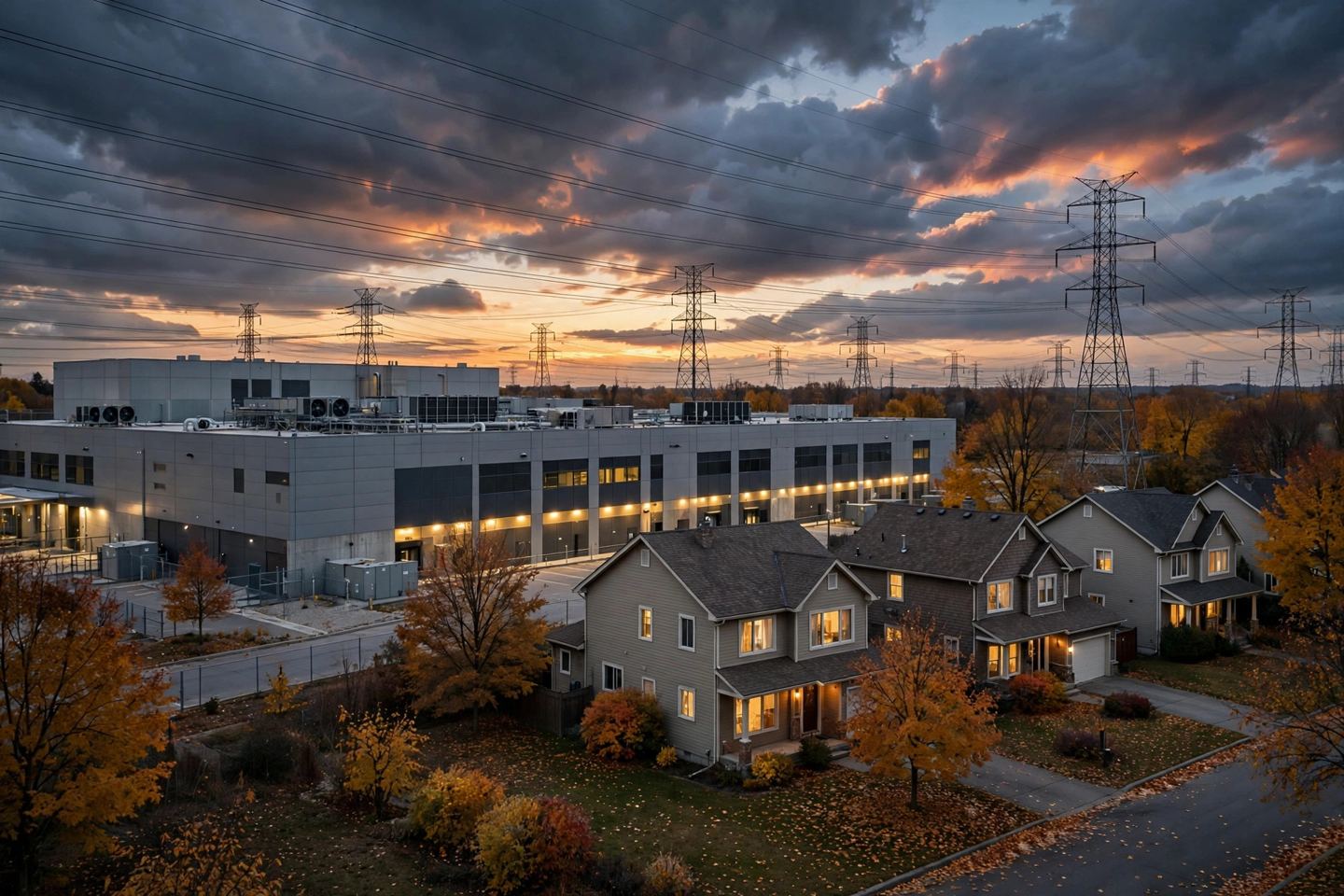 Editorial illustration
Electricity prices, long a background issue in American elections, have become a defining pocketbook question in the final days before Tuesday's midterm elections — and Ohio is one of the states where the squeeze is sharpest.
U.S. household electricity prices have risen more than 10% since 2024, outpacing the rise in costs for other goods and services, according to Energy Information Administration (EIA) data cited by Reuters. In battleground states that are also hot spots for new data centers — Ohio, Michigan and Pennsylvania — power bills have grown even faster, in some cases by triple the inflation rate.
Ohio's residential electricity bills have grown by more than 20% over the last two years, Reuters reported, citing EIA data. A companion Reuters analysis put the increase at 9.4% from a year ago and 53% since 2019 — among the steepest rises in the eight key swing states it tracked. Across those states, households are paying $50 to $60 more a month for power and gasoline combined than a year ago; in Ohio, the combined monthly increase was $60.
Both Pennsylvania and Ohio sit inside PJM, the country's largest power grid operator, serving 13 states and Washington, D.C. Its capacity auctions, which pay power plants to remain available to meet future demand, have set three consecutive pricing records this year. Reuters notes that some of the upward pressure reflects rising demand from data centers, but it has also been driven by grid investments, natural gas prices and power plant retirements.
The politics have followed the bills. Candidates for governor and other top state offices are promising to crack down on utilities — freezing rate increases, cutting guaranteed returns, or reshaping the commissions that approve them. Utilities are on track to match last year's record $31 billion in rate-increase requests to regulators, according to a survey by the consumer-advocacy nonprofit PowerLines cited by Reuters, and are expected to carry out nearly $1.3 trillion in capital spending over the next five years, according to S&P Global's Regulatory Research Associates.
"It could be the first election to feature utilities and electricity, specifically, as a prominent issue in the midterms," Charles Hua, executive director of PowerLines, told Reuters. "Part of that is because people's utility bills have gone up and up, and they don't see any end in sight."
In Ohio, the issue runs straight through the governor's race. Democrat Amy Acton has promised to lower energy bills if elected, saying she would appoint a public utilities commission "not beholden to utility companies" and work with the state attorney general to crack down on "excessive rate hikes and predatory practices." She has also said she supports a data center moratorium. Her Republican opponent, Vivek Ramaswamy, has said he would assure Ohioans living near data centers would not pay electricity bills at all.
Governors elsewhere are already using their leverage. In April, Pennsylvania Gov. Josh Shapiro announced that utility PECO Energy had agreed to withdraw a proposed rate increase, a move he said would reduce future bills by as much as $34 a month. In Virginia, home to the world's largest concentration of data centers, Gov. Abigail Spanberger has taken a similar approach — one industry analysts say could offer a playbook for this year's winners. And in New Jersey, Gov. Mikie Sherrill won office last year on a promise to freeze utility bills, which she carried out the day she took office.
Utility advocates warn that freezing rates or cutting guaranteed returns would not meaningfully lower household bills but could reduce long-term investment in the grid. "The grid is America's greatest machine, and it doesn't operate on the political calendar," Drew Maloney, president of the Edison Electric Institute, a trade group for investor-owned utilities, told Reuters. "It requires consistent investment every year to deliver reliable energy to our customers."
The pressure is not limited to electricity. Reuters' swing-state analysis found that the average American household spent about $456 a month on electricity and gasoline combined in the first seven months of 2026 — roughly $54 more than a year ago, an increase of around 14%. Gasoline spending in the swing states was up 19% to 23% in the first nine months of the year, driven in large part by the U.S. war with Iran, which began February 28 and disrupted shipments through the Strait of Hormuz. A recent Reuters/Ipsos poll found that 78% of Americans blame President Donald Trump's policies for rising prices outpacing their earnings, and 77% of respondents in an earlier Reuters/Ipsos poll cited concerns over rising electricity costs as a chief reason for opposing data centers.
Whoever wins Tuesday will inherit the bills — though, as Reuters notes, their ability to do much about them will be limited. Governors appoint the regulators who approve rate increases, but wholesale power costs are shaped by regional grid operators answering to federal regulators, and gasoline prices are set largely by global crude markets.
Sources: Reuters (Oct 31, 2026) — "Power bills and data centers cast rare spotlight on utilities in US midterms"; Reuters Open Interest (Oct 31, 2026) — "A guide to swing-state energy politics ahead of US midterms"; U.S. Energy Information Administration data as cited by Reuters.
Sponsored